


How Often Should You Service Your Vehicle's Brakes?
Your car's brakes are one of the most underappreciated safety features on your vehicle. While most drivers remember oil changes and tire rotations, they often forget about brake maintenance until something goes wrong. How often you need brake service actually varies based on your driving style, the local road conditions, and the unique challenges that come with Northeast Missouri's weather and terrain.
Why Regular Brake Service Is Essential for Safety
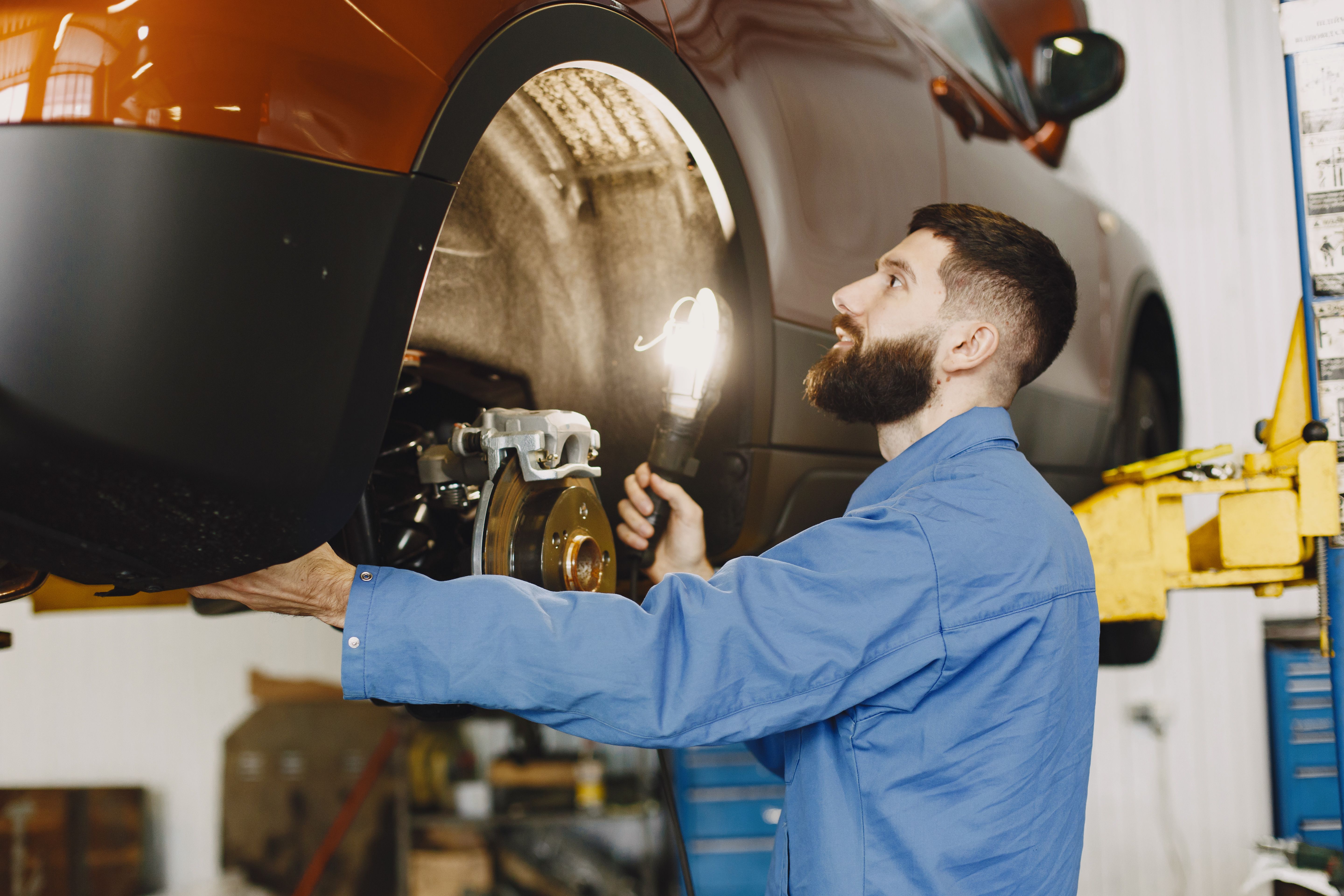 Man Checking on the Brakes of a Vehicle by
Gustavo Fring is licensed with
Pexels License
Man Checking on the Brakes of a Vehicle by
Gustavo Fring is licensed with
Pexels License
Your brakes are your lifeline. A significant percentage of car wrecks trace back to brake problems, usually because drivers put off maintenance. Well-maintained brakes give you steady stopping power and consistent performance no matter what Missouri's weather brings, especially during brutal winters when icy roads really challenge your braking system.
General Brake Service Intervals: What Most Drivers Should Know
If you're wondering how long brakes last, manufacturers suggest checking them every 7,500 miles, which lines up nicely with regular car maintenance every 5,000 to 7,500 miles. To catch problems early, inspect your brake pads, rotors, and fluid every 6,000 to 10,000 miles.
Replacement timing varies widely. Most brakes last 25,000 to 65,000 miles, with brake pads typically lasting between 20,000 and 60,000 miles, depending on where you live and your local road conditions. Stop-and-go traffic burns through pads faster, while highway driving may let them last up to 60,000 miles. Rotors usually last 50,000 to 70,000 miles but might need attention sooner if damaged.
Top Signs It's Time To Service or Replace Your Brakes
Once you know what to look out for, the signs you need new brakes are easy to spot:
- High-pitched squealing: Built-in wear indicators are letting you know that your brake pads are wearing thin.
- Grinding sounds: Your pads are completely worn, and metal is scraping your rotors. When you hear that, get your car to a mechanic immediately.
- Vibrating brake pedal: Your rotors may be warped.
- Spongy brake pedal: There's air in the brake lines, leaking fluid, or worn hoses.
- Burning smells after heavy braking: This often happens on hills or in heavy traffic.
- Pulling to the side when braking: Your brake pads are uneven, or there's an issue with the fluid level.
- Dashboard brake warnings: Dash lights can indicate low brake fluid or worn pads.
Check your pads through the wheel spokes — you should see about a quarter inch of material. If you're experiencing longer stopping distances, grinding noises, or vibrations when braking, take your car in for an inspection as soon as possible.
Factors That Affect How Often You Need Brake Service
Your brake components can wear at different rates based on your specific driving habits and road conditions. Salt from winter streets and dust from gravel can corrode your brakes and wear down protective coatings. Vehicle type matters too. Big trucks and SUVs need more stopping power, wearing pads faster than lightweight cars. Towing, hauling, and stop-and-go traffic all make brakes work overtime. Small habits can create big problems; for example, resting your foot on the brake pedal builds heat that can damage components prematurely.
Maintaining Brake Pads, Rotors, and Fluid
At some point during your car's life, you'll need to repair or replace the calipers, pads, rotors, shoes, and hoses. Knowing what to watch for will help you understand why mechanics recommend certain services — and when they're trying to sell you parts you don't need.
Brake pad material dramatically affects how long they'll last:
- Organic pads: This budget-friendly option typically lasts about 20,000 miles and works fine for lighter cars and low-traffic commutes.
- Semimetallic pads: These can last between 30,000 and 60,000 miles, balancing performance and cost, though they can be harder on rotors.
- Ceramic pads: These are the premium choice, reaching 70,000 miles with better heat diffusion and less dust, making them ideal for larger vehicles and heavy traffic.
Brake fluid needs special attention because it absorbs moisture from the air over time. This creates steam bubbles when the system heats up, leading to that spongy feeling and reduced stopping power. That's why you should change your brake fluid every two years, regardless of the mileage. For rotors, if your pedal feels steady — no pulsing or vibration — and the rotor measures at least 0.04 inches thicker than the minimum specification, you can hold off on replacing them.
How Brake Inspections Fit Into Your Routine Maintenance Schedule
Brake checks are part of regular car care. Schedule at least a yearly once-over to assess their condition and spot potential issues. This proactive approach lets you catch small problems before they become major repairs, saving you cash and keeping you safe on the road.
A proper brake inspection looks at your entire system — pads, rotors, calipers, fluid, and lines. Your mechanic will look for obvious wear and damage, measure the pads' thickness and wear patterns, inspect the rotors' condition, check the fluid levels and quality, and test how the whole system performs to make sure everything works together smoothly.
Trust Kirksville Motor Company for Professional Brake Service
At Kirksville Motor Company, our ASE-certified mechanics check everything: pads, rotors, fluid, calipers, and more. We use top-quality parts and specialty tools to fix problems the first time. Our techs renew their credentials every five years and all have at least two years of hands-on experience, so you can rest assured knowing you're working with skilled experts.
Don't wait until your brakes start grinding before getting them checked. Call our service team today to book an inspection, or you can visit us at Kirksville Motor Company and talk to brake experts who care about your safety, not just your wallet.